Physical samples and digital process explanation remain co-located.
Interactive research experience · 2025–2026
Biofibre Explorer
An augmented-reality learning experience that reconnects textile materials with the wet-spinning processes behind them.
Read the project ↓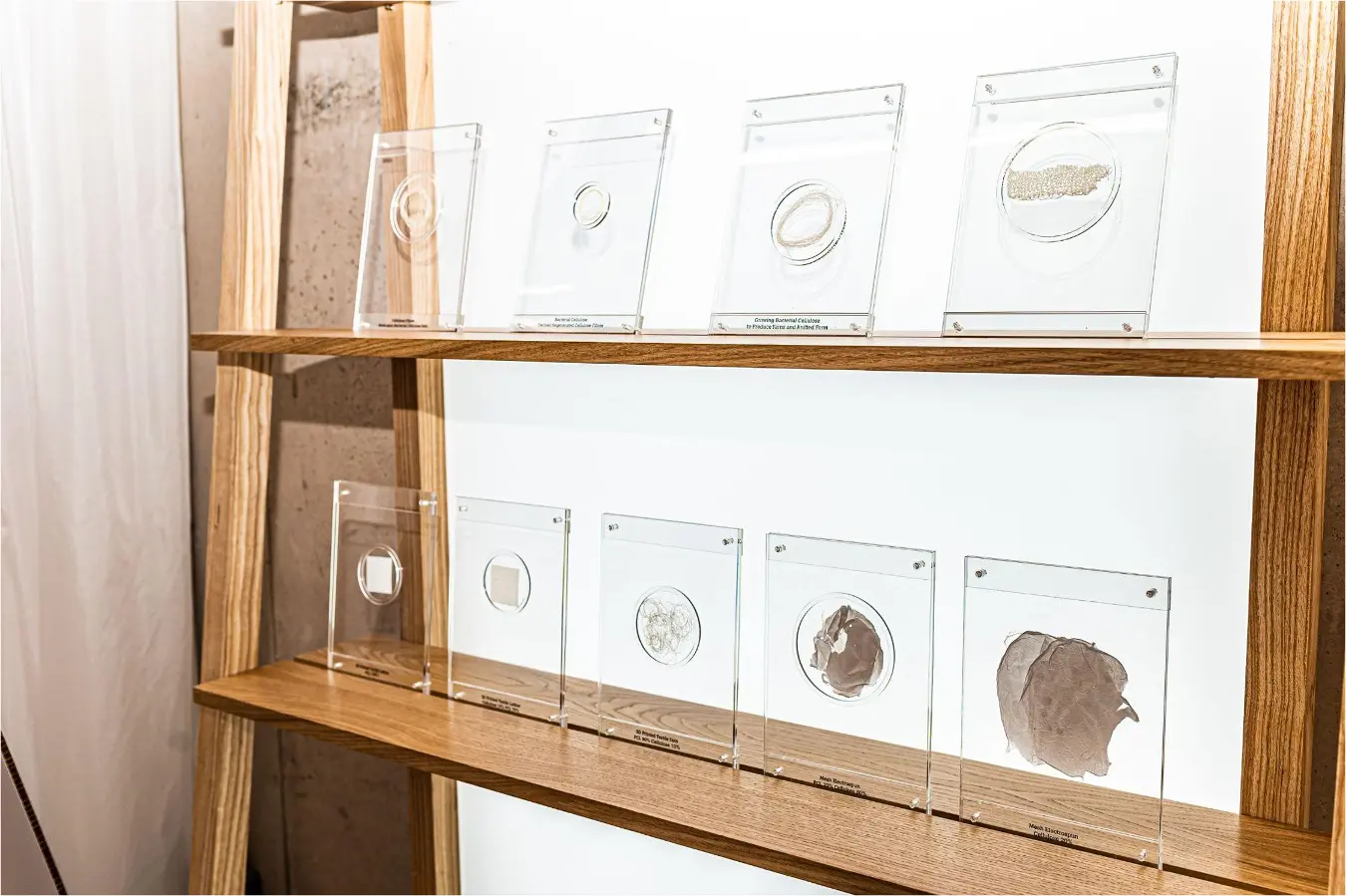
Project typeResearch · Tool / prototype
ThemesEmbodied & haptic interaction · Circular textiles & sustainability · Materials & making
FormAugmented-reality research experience
Year2025–2026
Material focusCellulose-based textile fibres
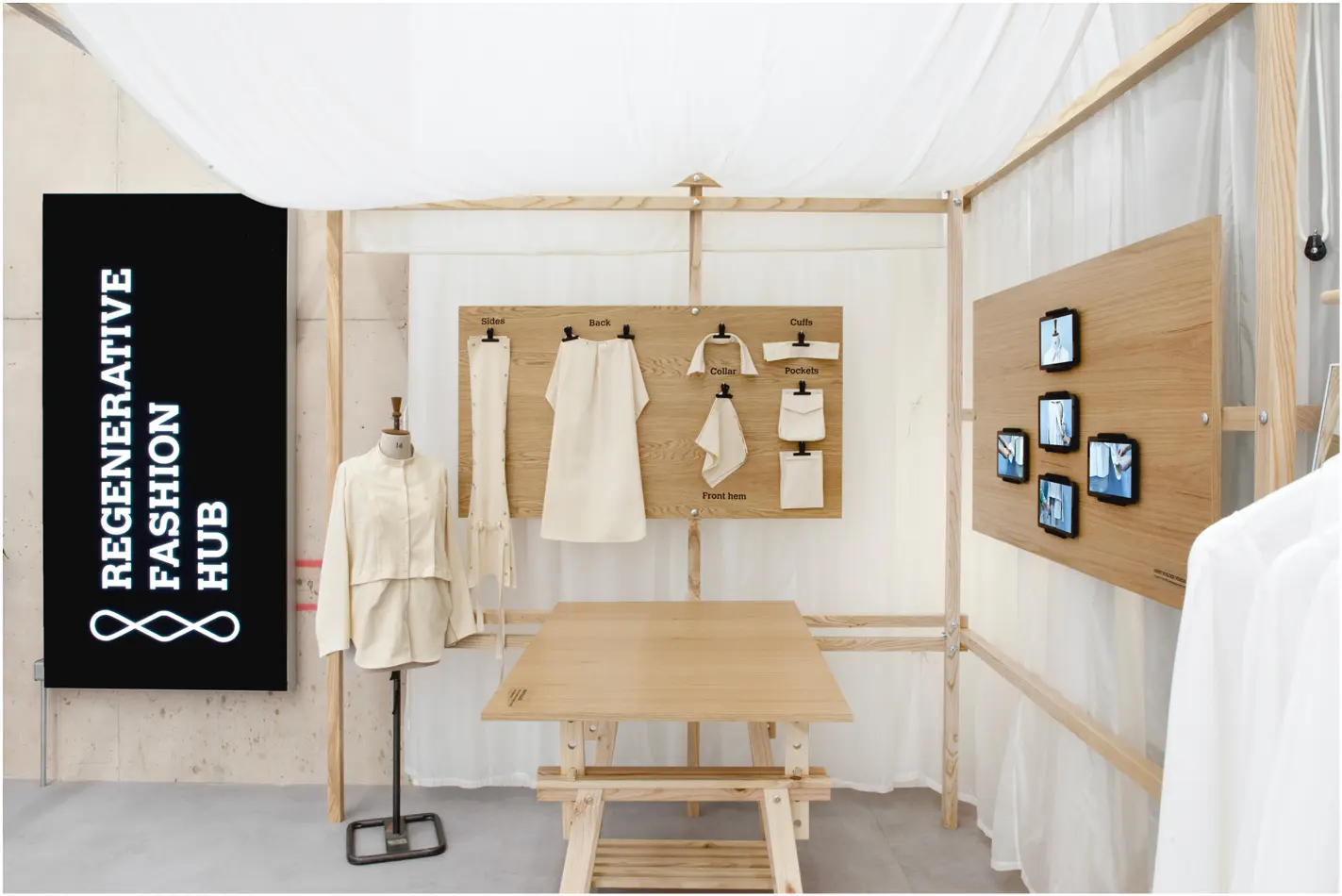
ContextRegenerative Fashion Hub
01 · Proposition
From finished fabric back to process
Biofibre Explorer makes the transformation of cellulose into a textile fibre available as an encounter rather than an abstract supply-chain fact.
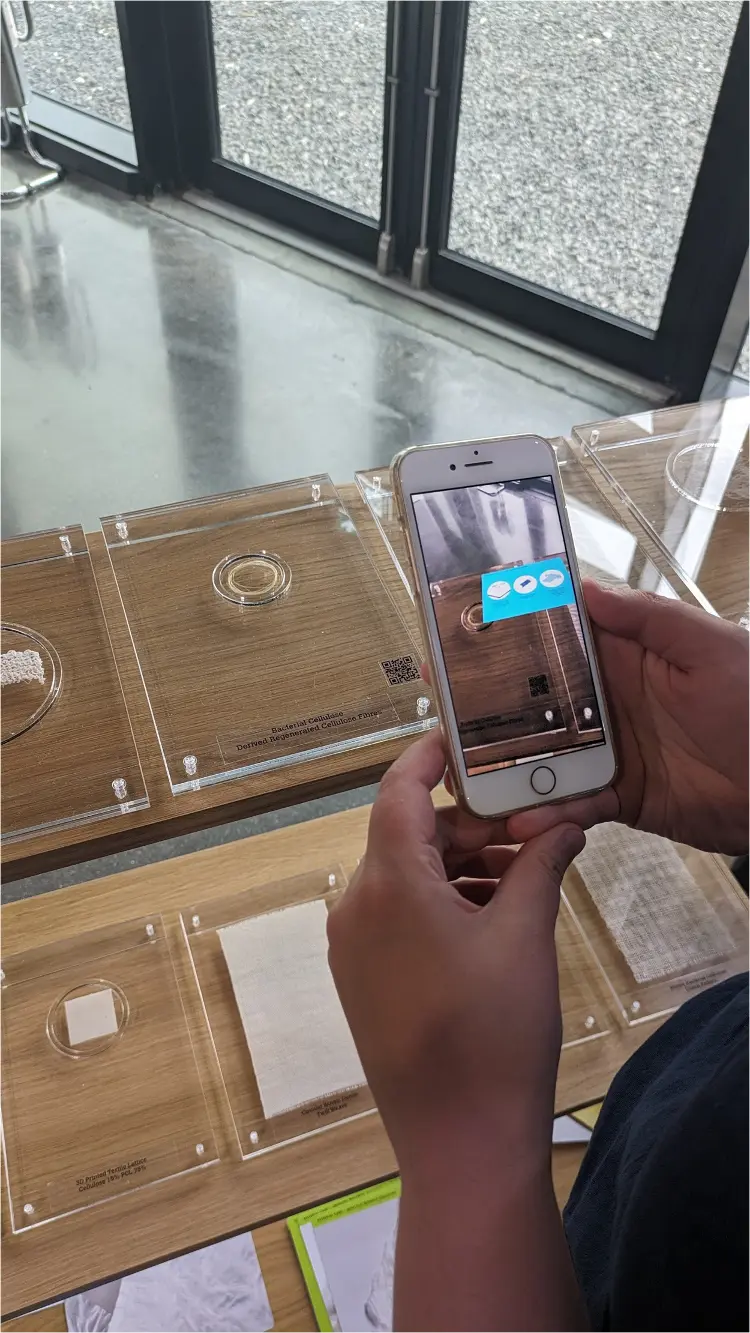
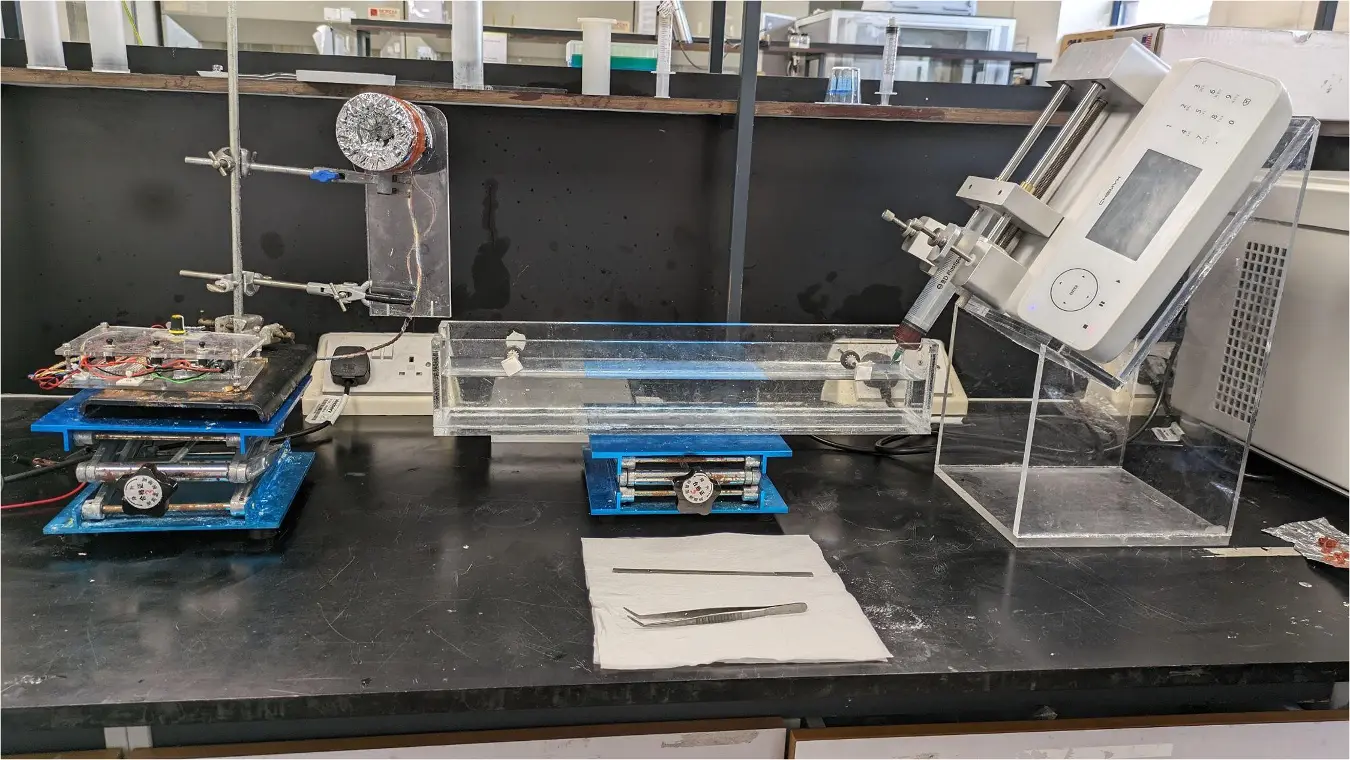
Visitors begin with physical bio-based samples and use a phone to reveal a layered AR demonstration of wet spinning. The digital experience sits beside the material, allowing process knowledge and sensory inspection to reinforce one another.
The project asks how immersive learning can support material literacy, curiosity and more informed participation in textile circularity.
02 · Experience
Material, overlay, understanding
- 01
Inspect
Visitors first encounter samples made from cellulose-based feedstocks.
- 02
Reveal
A mobile AR layer demonstrates how a wet-spinning system transforms material into fibre.
- 03
Connect
Origins, process, applications and circular possibilities can be considered together.
03 · Reflection
Learning is part of material attachment
Making production visible can change a sample from an anonymous surface into evidence of a system.
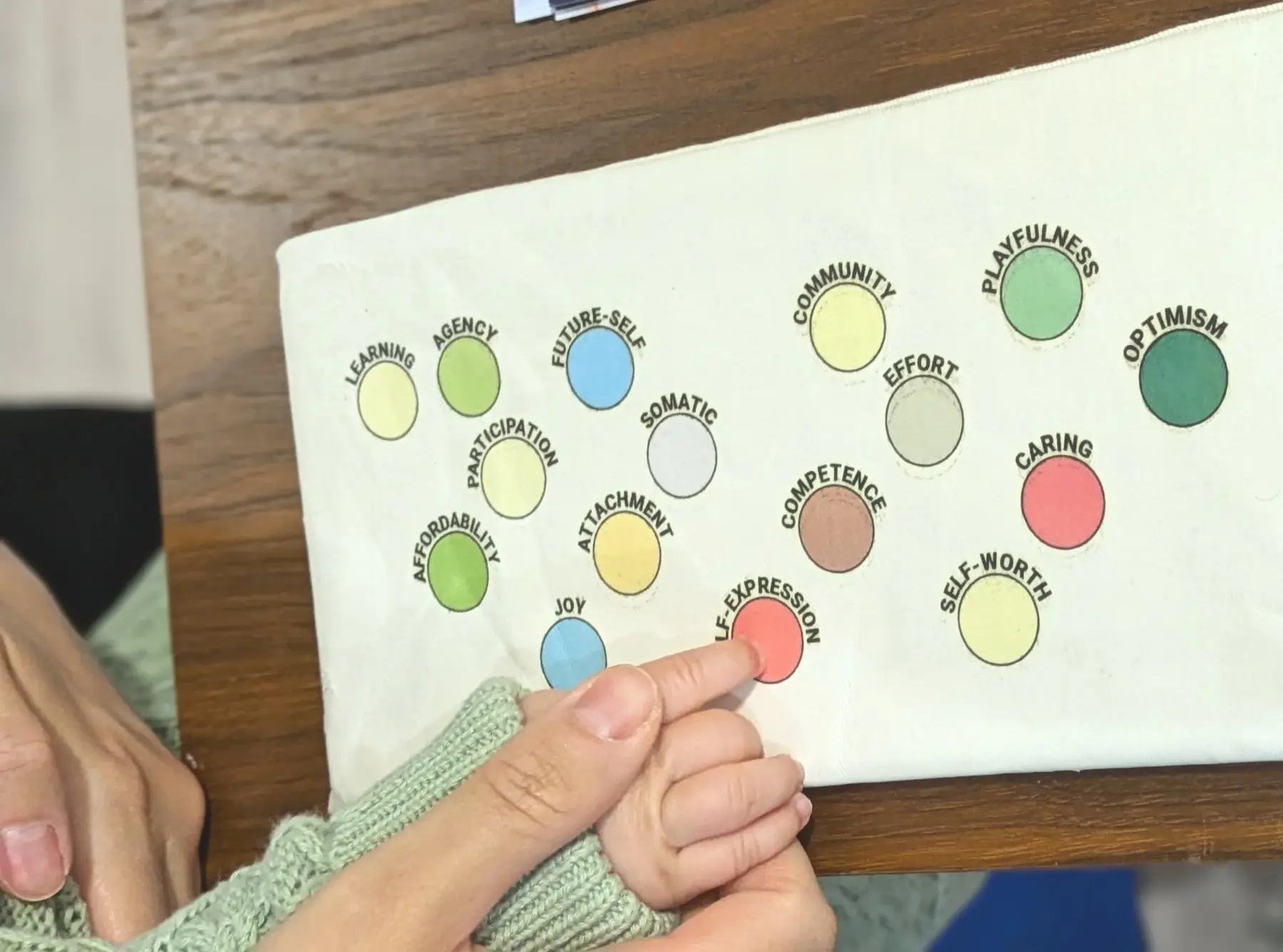
Evaluation focused on learning, material origins and applications, circular practices, and dimensions of wellbeing including competence, playfulness and attachment. Participant feedback also pointed to the value of closer views and more step-by-step control.
Laboratory knowledge is translated for non-specialist audiences.
The material is framed through both origin and possible future life.
Credits & archive
Project record
- Research and design
- Ricardo O’Nascimento, Bruna Petreca, Roberta Morrow, Christopher Dawes, Miriam Ribul, Sameer Rahatekar and Sharon Baurley
- Research context
- Textiles Circularity Centre / Royal College of Art
References
Open-access research record ↗