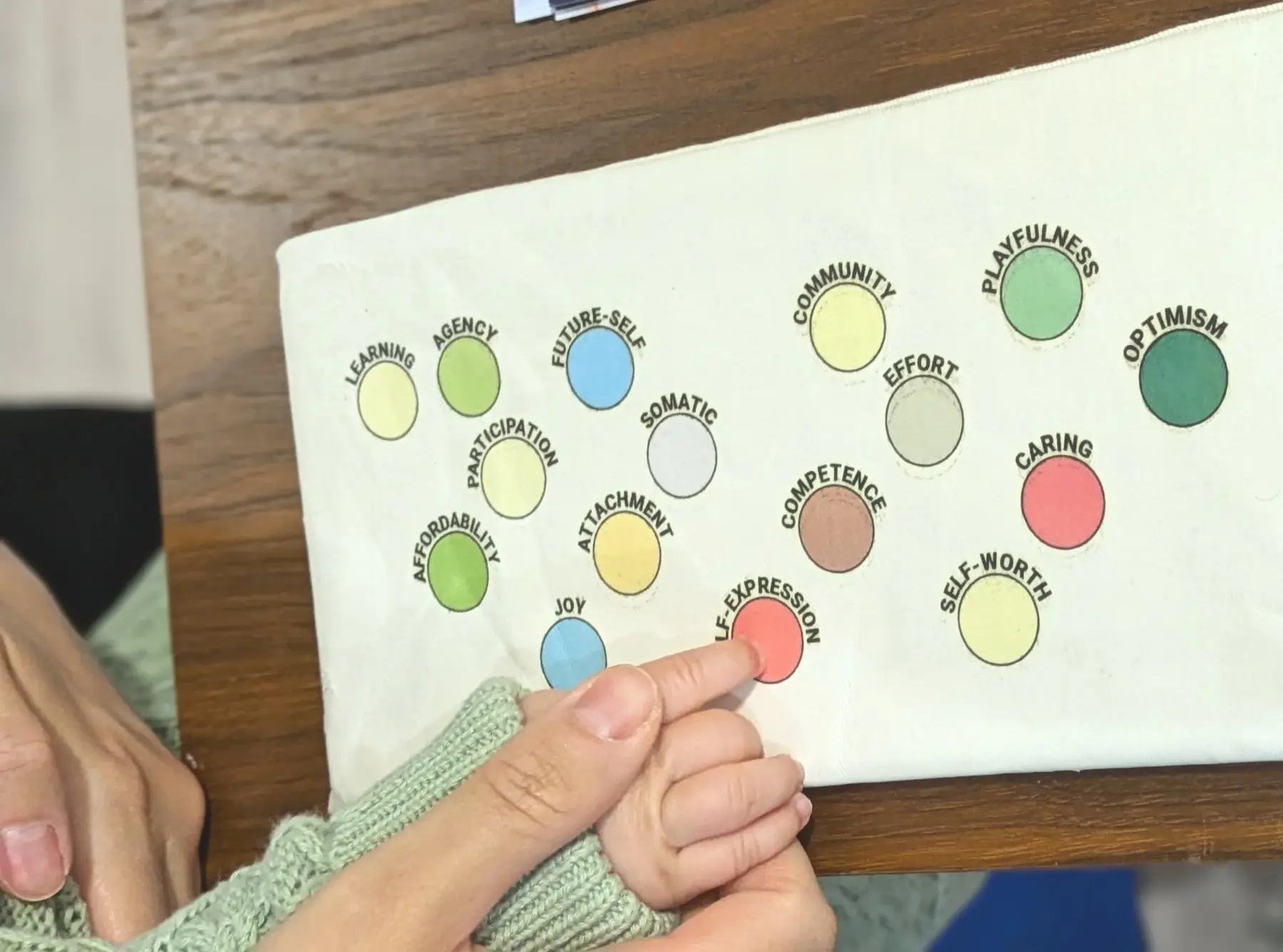
Garment, strip and modular textile configuration.
Research artefacts · 2024
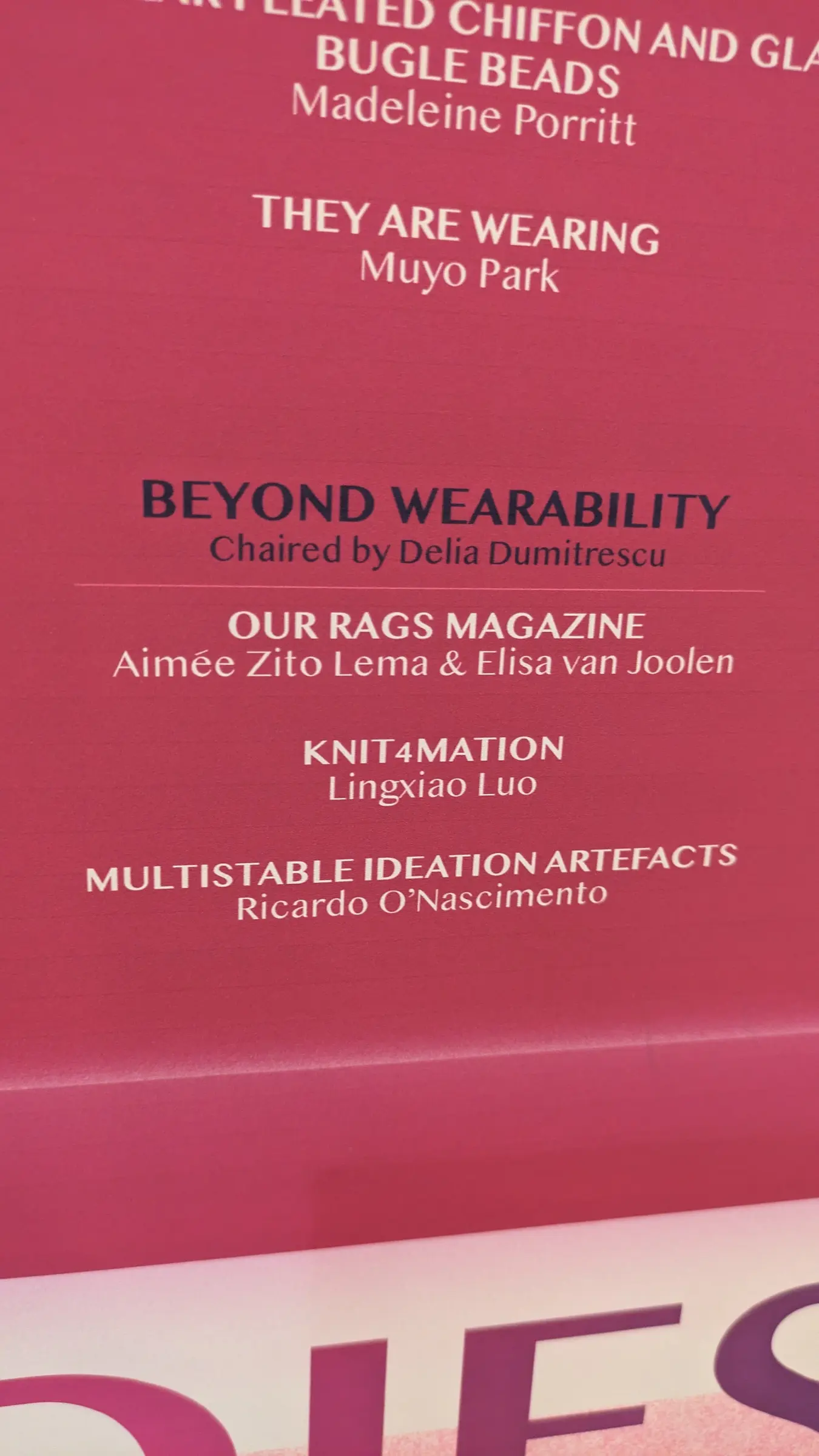
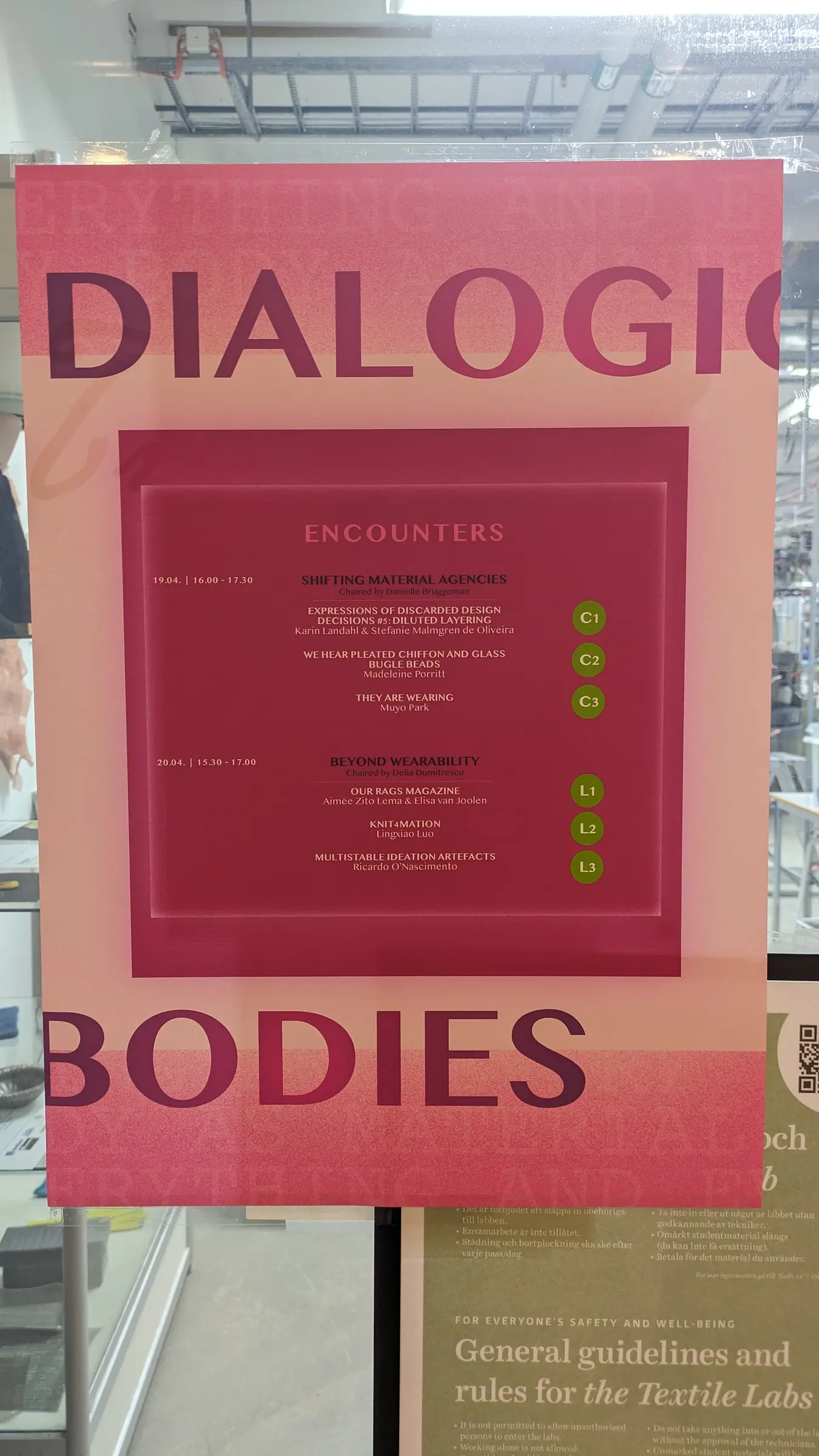
Multistable Ideation Artefacts
Three open-ended wearables for thinking with the body about technologies that do not yet have a settled use.
Read the project ↓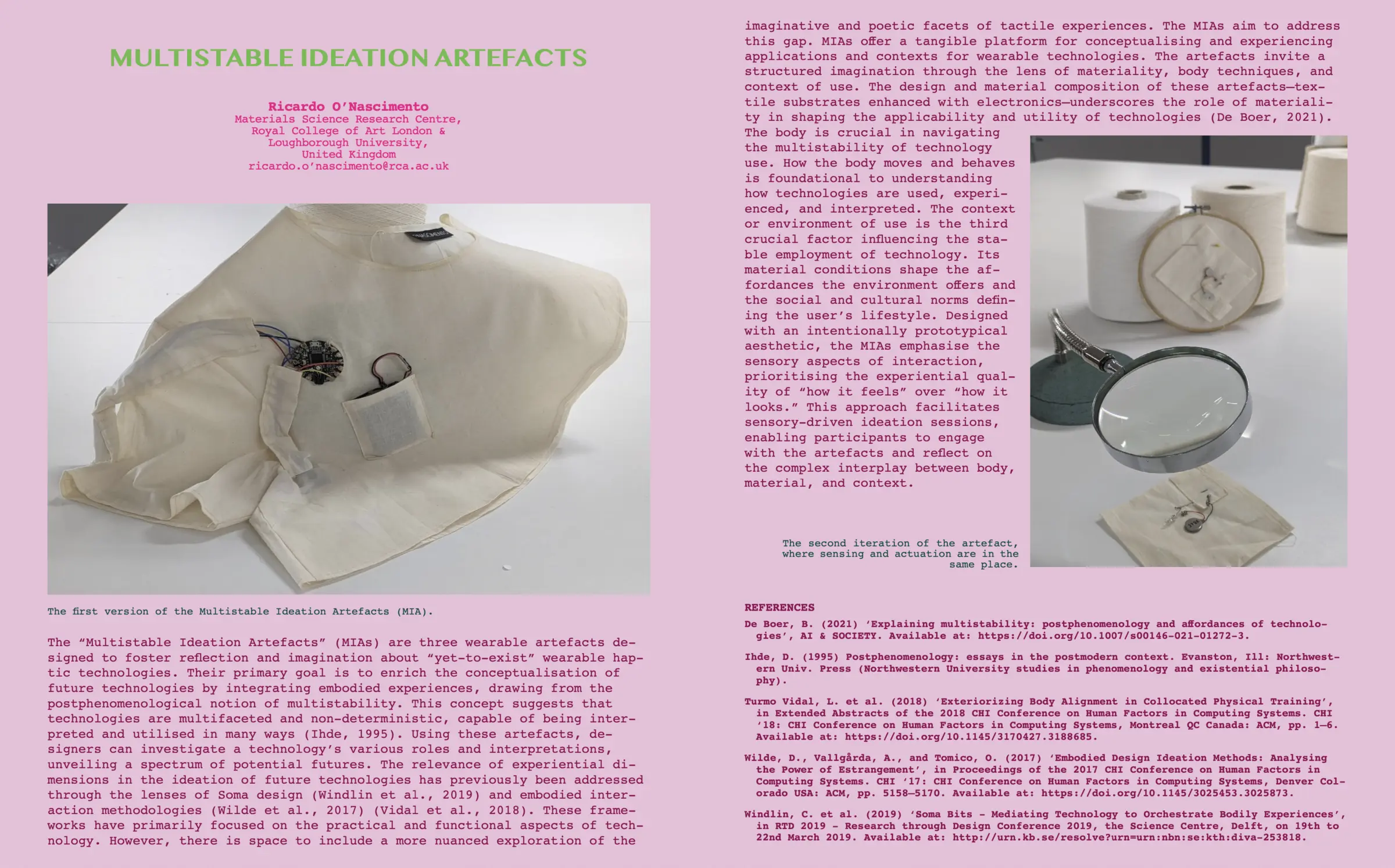
Project typeResearch · Tool / prototype · Method / framework
ThemesEmbodied & haptic interaction · Speculative & critical design
FormThree wearable research artefacts
Year2024
StudyEmbodied ideation with four participants
ContextWearable haptics / multistability
01 · Proposition
An artefact can suggest many futures
The Multistable Ideation Artefacts suspend the usual question—what does this device do?—and replace it with a bodily one: what could this sensation become?
A garment, a textile strip and a modular piece each connect sensing and actuation without assigning a single application. Their deliberately unfinished character gives participants room to interpret movement, pressure and vibration through their own bodies.
The method draws on postphenomenology and the idea of multistability: technologies can take on different meanings and roles depending on bodies, situations and ways of use.
02 · Experience
Sense, interpret, imagine
- 01
Encounter
Each participant wears and moves with all three artefacts without being given a prescribed purpose.
- 02
Attend
Sensation, movement and bodily awareness become evidence: where is the effect felt, and how does it change?
- 03
Project
Participants imagine possible applications, settings and social meanings from the experience itself.
03 · Reflection
Ambiguity becomes a design resource
The artefacts do not represent finished products. They make interpretation visible as part of designing technology.
Across the sessions, the same sensor–actuator relation was understood in multiple ways. This plurality helped surface assumptions about usefulness while keeping poetic, intimate and speculative possibilities in play.
Every participant explored the complete set.
No fixed application was assigned in advance.
Credits & archive
Project record
- Research and design
- Ricardo O’Nascimento
- Doctoral supervision
- Tincuta Heinzel and Kerri Akiwowo
- Research context
- Loughborough University
References
Documentation from the project archive.