The project’s conceptual premise uses an estimate of 24 blinks per minute.
Interactive video installation · 2010
The Unseen Movie
An eye-tracking installation that turns every blink into an edit, broadcasting the film frames one viewer could not see.
Read the project ↓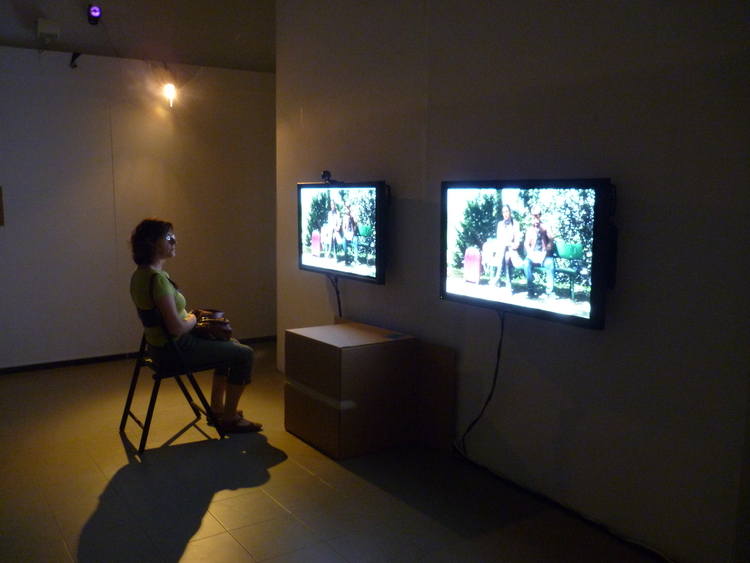
Project typeArtwork · Installation / environment
ThemesEmbodied & haptic interaction · Speculative & critical design
FormInteractive video installation
Developed2010
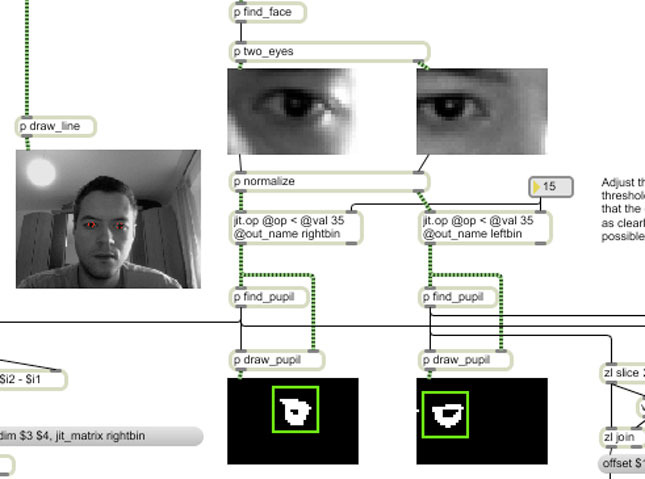
InterfaceEye tracking / real-time frame capture
ContextPerception, attention and spectatorship
01 · Proposition
What does a film become when the viewer’s blindness edits it?
The Unseen Movie treats blinking not as an interruption outside cinema, but as an involuntary editing action produced by the spectator’s own body.
The project begins from an estimate of 24 blinks per minute and imagines the cumulative duration of these tiny gaps in vision. Rather than treating them as empty time, the installation turns each missed instant into an image that can be collected and seen by somebody else.
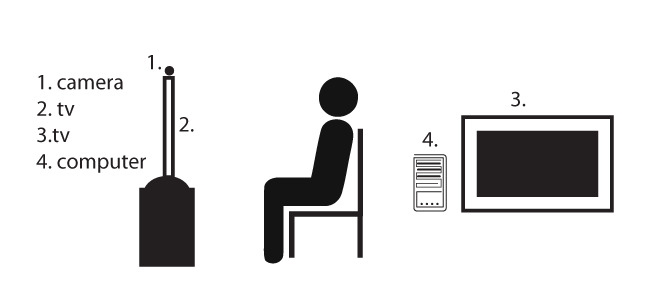
A participant watches Moment. Aufnahmen on one screen while a camera tracks their eyes. When the system detects a blink, it captures the corresponding film frame and immediately sends it to a second screen. The installation therefore produces another movie: one assembled from precisely the moments absent from the first viewer’s experience.
02 · Experience
Watch, blink, reveal
- 01
Watch
The participant sits in front of a monitor and watches the film while a camera above the screen tracks the position and state of the eyes.
- 02
Blink
When the eyelids close, the system identifies the precise frame that disappears from the participant’s visual experience.
- 03
Broadcast
That missed frame is captured and shown on a second monitor, allowing other visitors to see the participant’s unseen movie.
03 · Reflection
Absence becomes a second image stream
The installation relocates cinematic editing from the filmmaker’s timeline to the involuntary rhythms of a particular viewing body.
No two spectators produce the same unseen movie. Fatigue, attention and bodily rhythm alter the sequence of captured frames, making perception visibly contingent rather than neutral or complete. The work also reverses the usual privacy of blinking: an instant that belongs to the viewer’s absence becomes public material for other people to watch.
One presents the film; the other reveals the sequence missed by the active viewer.
Eye tracking, blink detection and frame capture occur while the film is being watched.
Credits & archive
Project record
- Concept, design and development
- Ricardo O’Nascimento
- Film shown in the installation
- Moment. Aufnahmen by Michael Prandstäter
- Software environment
- Max/MSP/Jitter and computer vision