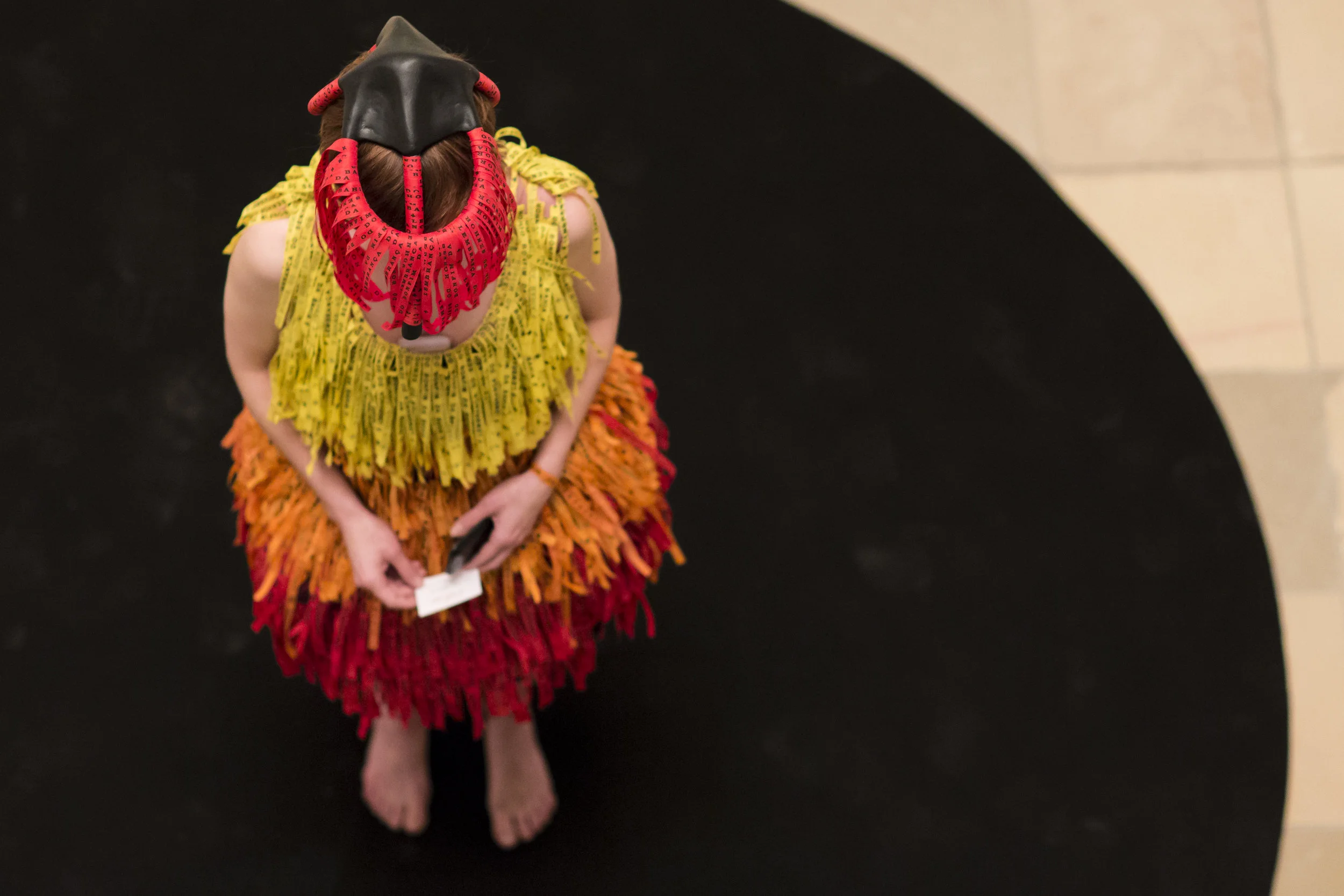
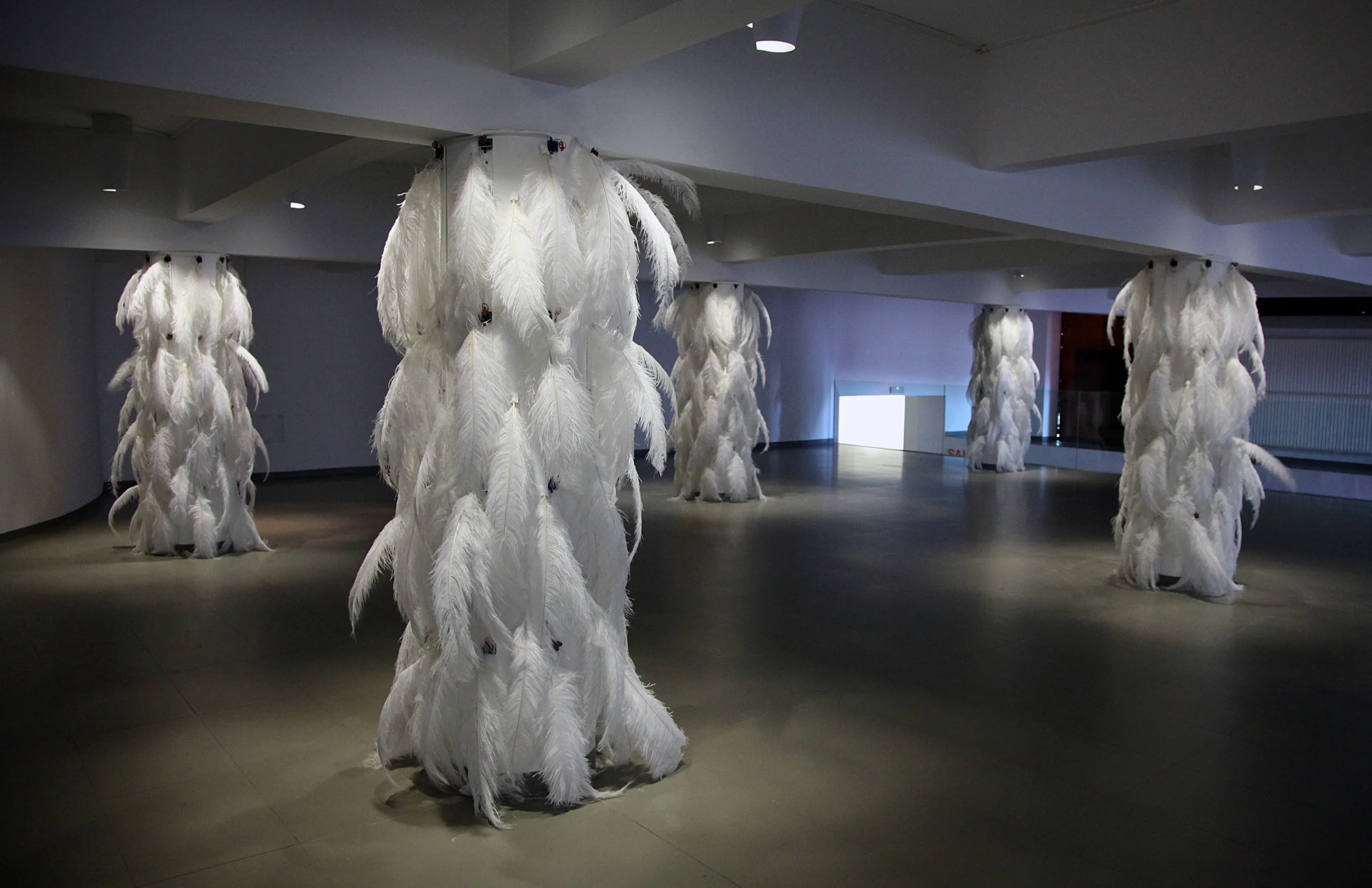
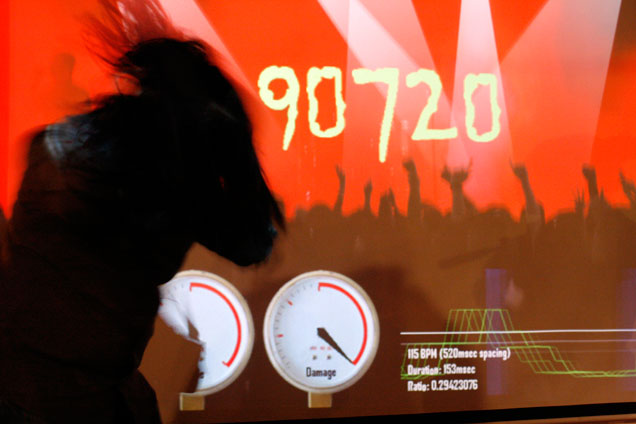
Ambient medium-wave activity becomes the input for the wearable.
Kinetic wearable artwork · 2008
Taiknam Hat
Kinetic feathered headwear that detects medium-wave radio signals and gives electromagnetic radiation a visible, bodily movement.
Read the project ↓2008Taiknam HatArchive documentation under review
Project typeArtwork · Sculpture · Tool / prototype · Performance · Collaboration · Fashiontech
ThemesEmbodied & haptic interaction · Wearables & e-textiles · Materials & making
FormKinetic wearable artwork
Year2008
InputMedium-wave radio signals
OutputMotorised feather movement
01 · Proposition
Invisible signals animate the silhouette
Taiknam Hat turns ambient electromagnetic radiation into movement through a wearable structure of electronics, mechanics and feathers.
A radio receiver detects medium-wave signals in the surrounding environment. A microcomputer interprets the activity and controls a motor connected to a mechanical feather structure, causing the headwear to shift and respond around the wearer.
The work brings an infrastructure normally experienced only through devices into the scale of fashion and gesture. The wearer becomes both an antenna and a moving display, while the feathers connect technological sensing with older vocabularies of ornament, status and bodily extension.
02 · Experience
Detect, interpret, move
- 01
Receive
The wearable detects medium-wave radio activity in its immediate surroundings.
- 02
Process
A microcomputer translates detected signal behaviour into motor commands.
- 03
Materialise
The feather structure moves, giving invisible electromagnetic activity a public silhouette.
03 · Reflection
The body becomes an environmental interface
Taiknam Hat uses fashion not to conceal electronics, but to give ambient technical systems a cultural and expressive form.
Radio activity is ordinarily understood through reception devices and technical measurement. By attaching detection and movement to the head, the work relocates this knowledge into posture, ornament and social visibility. Its kinetic feathers make the electromagnetic environment legible as a changing bodily condition.
Motorised mechanics translate signal variation into feather movement.
The body carries and publicly expresses environmental data.
Credits & archive
Project record
- Concept and design
- Ricardo O’Nascimento and Ebru Kurbak
References
Taiknam Hat — practice archive ↗