Multiple hearts give the creature an invented anatomy and make rhythm central to its character.
Interactive sculpture · 2014
Multipodiforme Coruña
An interactive sculpture that imagines a soft-bodied, four-hearted creature whose beat, breath and movement emerge when a visitor approaches.
Read the project ↓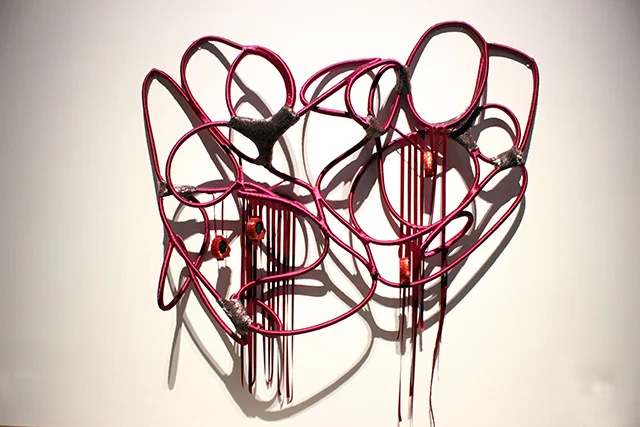
Project typeArtwork · Sculpture · Installation / environment
ThemesEmbodied & haptic interaction · Materials & making · Speculative & critical design
FormInteractive sculpture
Developed2014
InteractionProximity / beat / breath
CommissionMuseo Gas Natural Fenosa, A Coruña
01 · Proposition
An unfamiliar organism makes its anxiety perceptible
Multipodiforme Coruña is the first creature in an imagined superorder of soft-bodied beings, defined not through scientific description but through a simple encounter with another body.
The sculpture has four hearts. As somebody approaches, it produces a rhythmic beat and expels bursts of air that simulate breathing. Its tentacle-like extensions begin to move, turning proximity into a display of agitation and giving the static object an uncertain form of life.
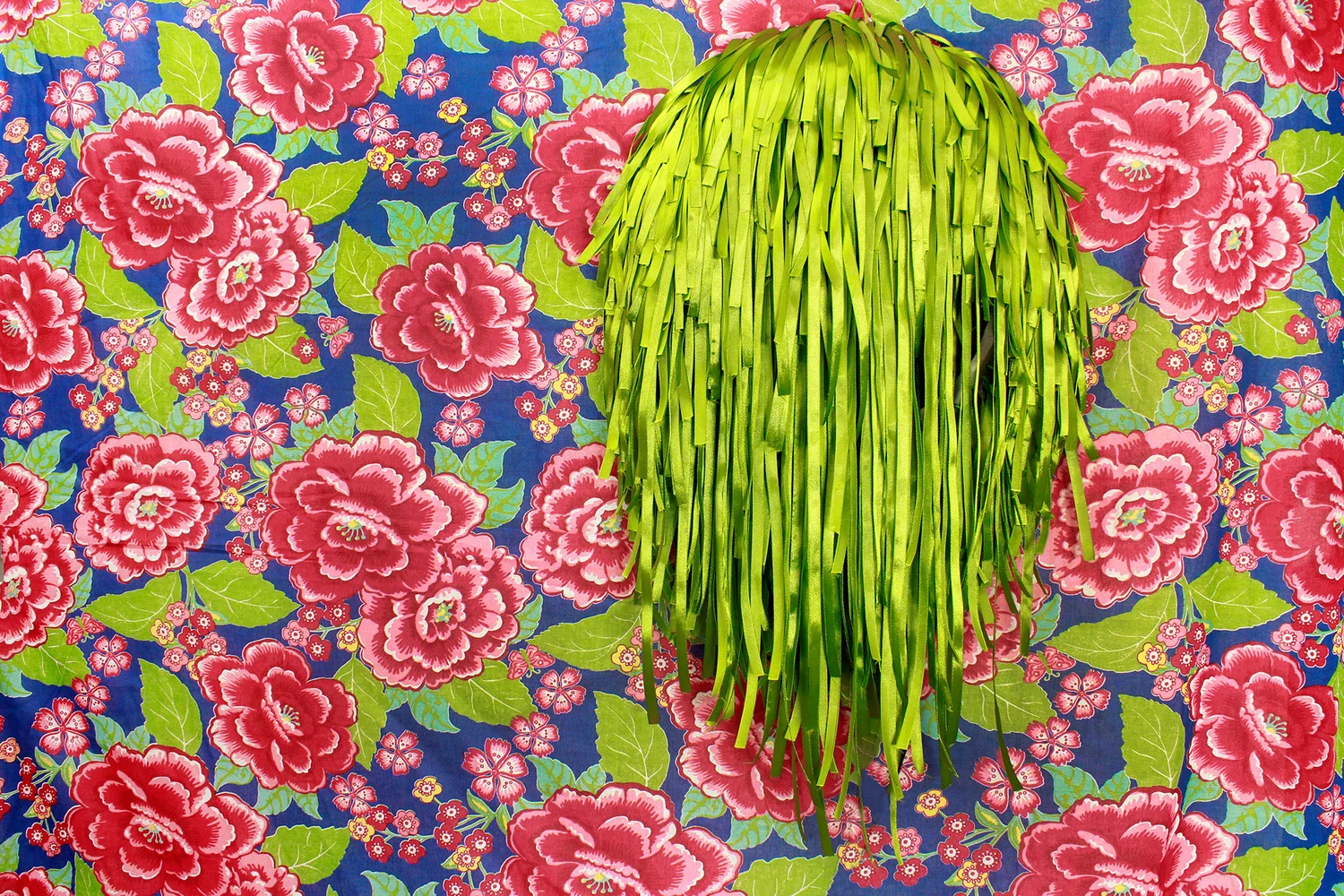
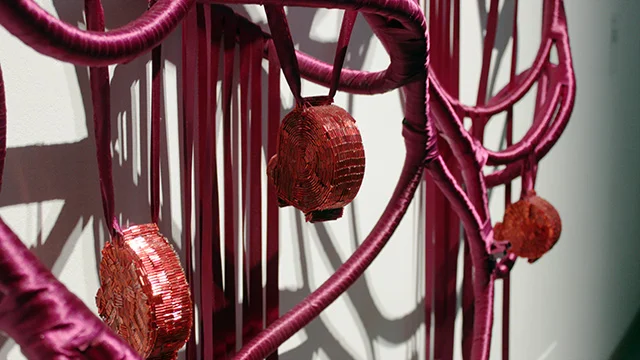
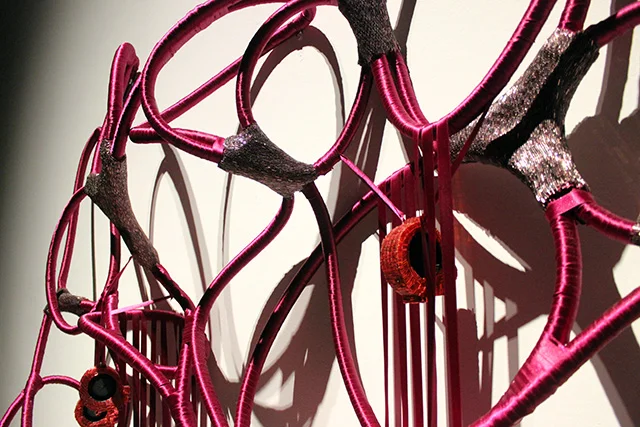
Thousands of glass beads and 270 metres of ribbon form the creature’s tactile, densely worked surface. The ribbon colours refer to the flag of A Coruña, where the sculpture was conceived and constructed, anchoring its speculative biology in a specific place.
02 · Experience
Approach, beat, breathe
- 01
Approach
The encounter begins when a visitor moves towards the wall-mounted creature and enters its perceptual field.
- 02
Beat
The sculpture answers with a rhythmic pulse associated with its four suspended hearts.
- 03
Breathe
Bursts of air and moving tentacles transform the response into a bodily expression of tension and anxiety.
03 · Reflection
Life is inferred from a few material cues
The work does not reproduce a known animal; it offers just enough rhythm, breath and movement for a visitor to recognise a vulnerable living presence.
This ambiguity makes the encounter relational. The visitor is not simply observing a sculpture but becomes the condition for its behaviour, while the creature’s apparent anxiety complicates the usual confidence with which humans approach exhibited objects. Its speculative taxonomy is also situated: local colours, accumulated handwork and electronic response bind an imaginary species to A Coruña.
Ribbon in the colours of A Coruña’s flag forms much of the sculpture’s surface.
Glass beads intensify the object’s crafted, tactile and organism-like presence.
Credits & archive
Project record
- Concept, design and development
- Ricardo O’Nascimento
- Commissioned by
- Museo de Arte Contemporáneo Gas Natural Fenosa (MAC), A Coruña, Spain
- Materials
- Ribbon, glass beads, garden hose and electronics