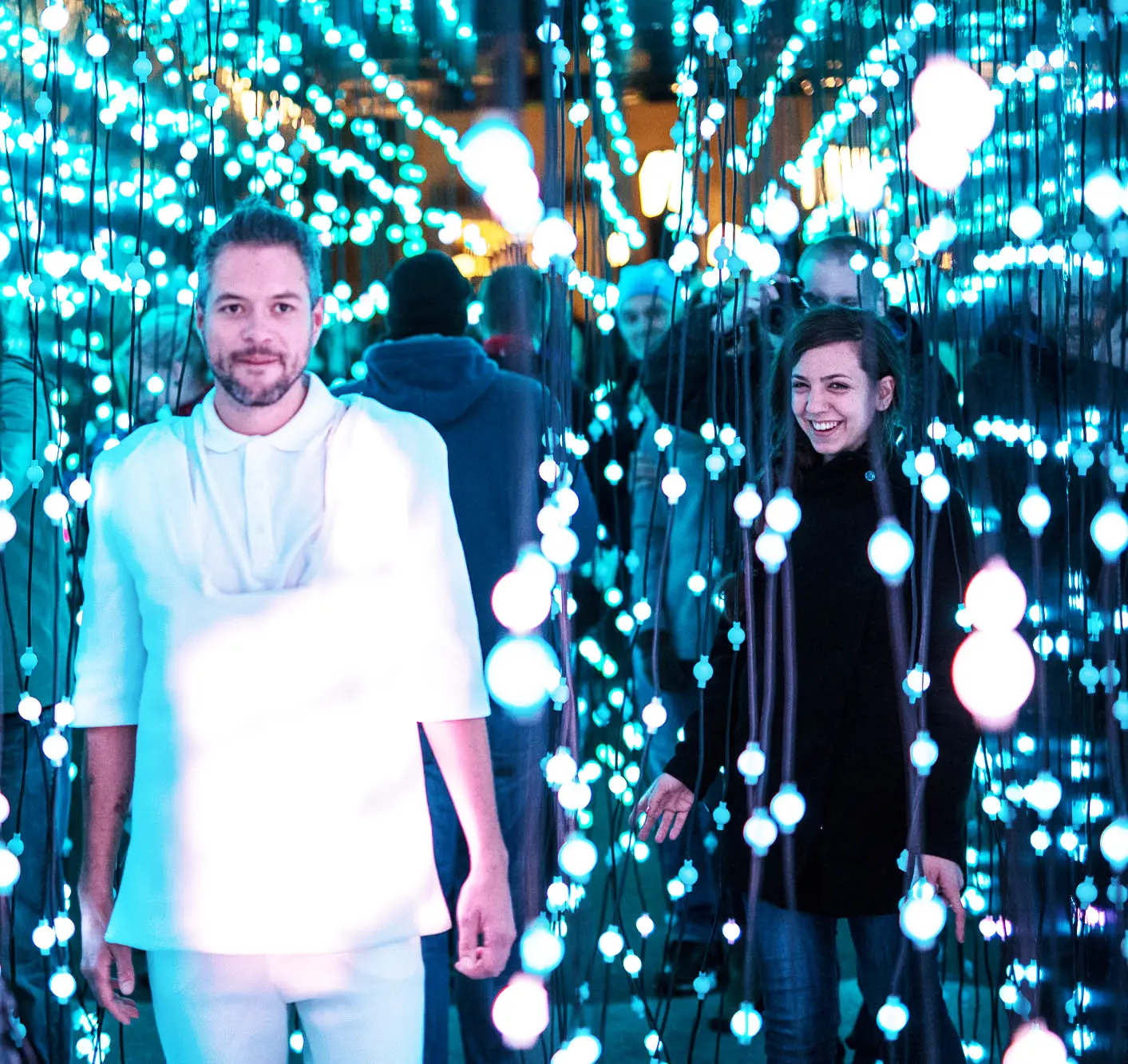
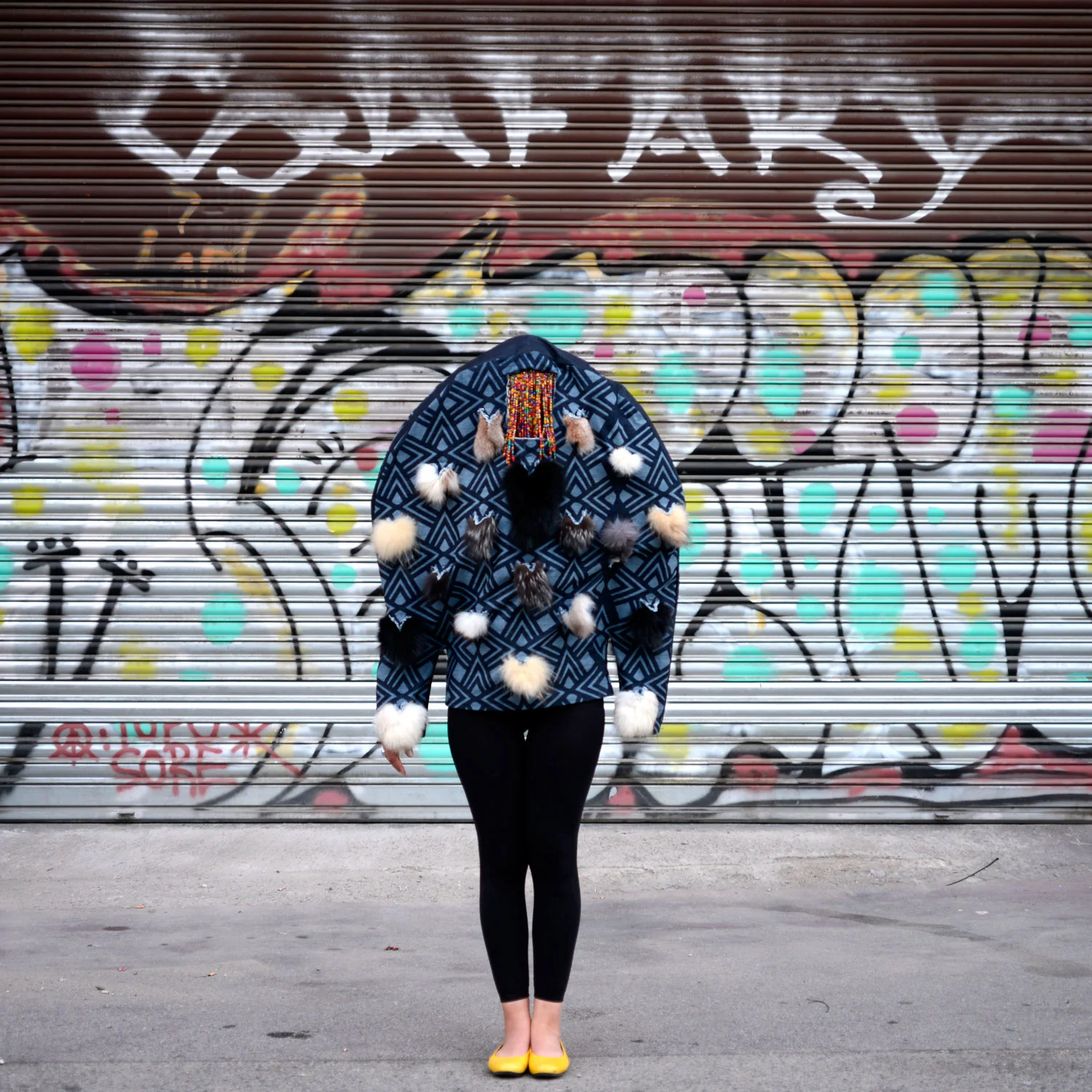
Particulate pollution becomes an immediate sequence of colour rather than an abstract measurement.
Data-responsive wearable performance · 2015–2019
Human Sensor
Illuminated wearables turn particulate-pollution data into shifting colour, bringing the invisible atmosphere onto bodies and into public space.
Read the project ↓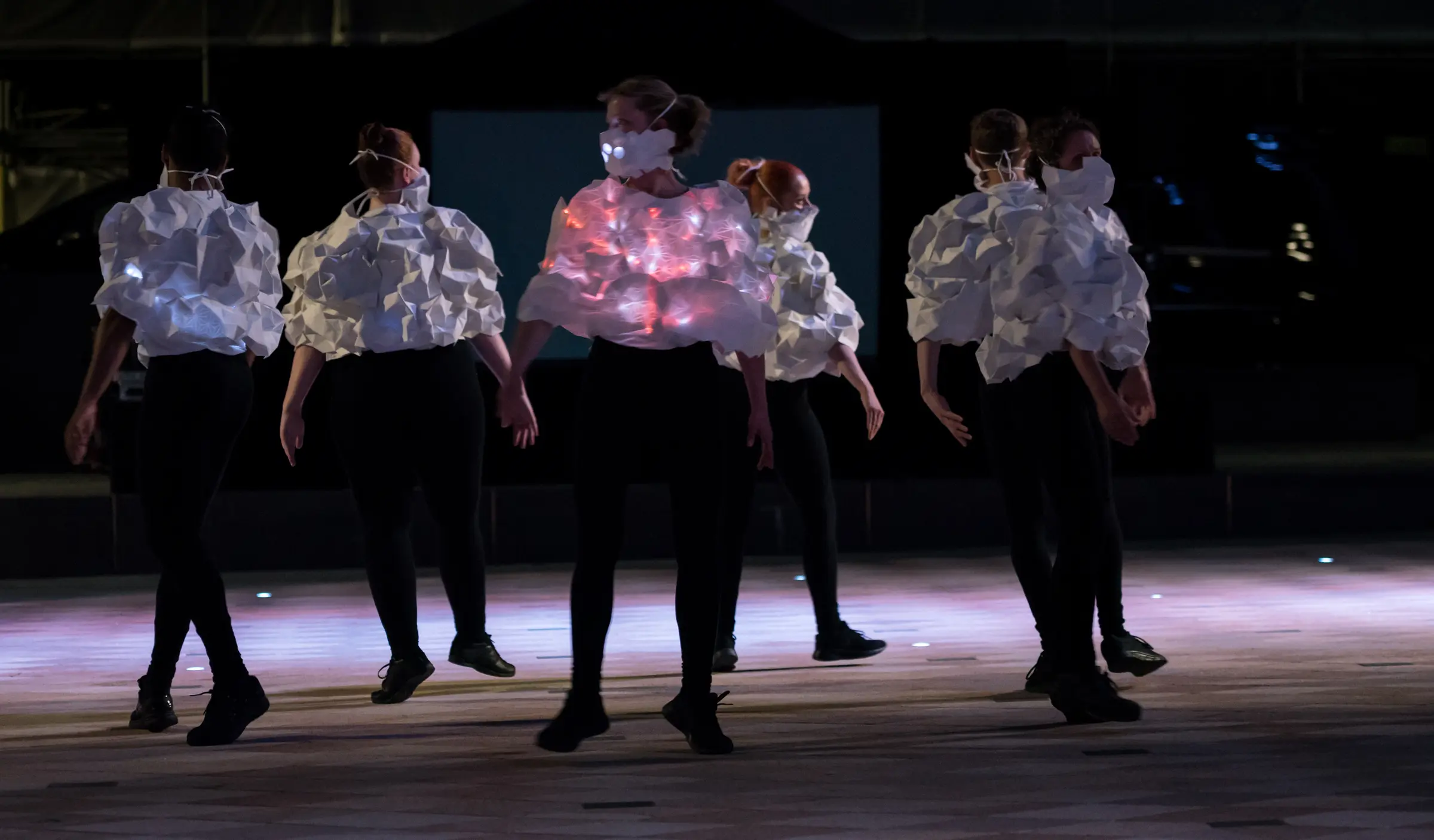
Project typeArtwork · Performance · Collaboration · Fashiontech
ThemesEmbodied & haptic interaction · Wearables & e-textiles · Speculative & critical design
FormData-responsive wearable performance
Developed2015–2019
ArtistKasia Molga
Ricardo’s roleWearable design and costume development
01 · Proposition
Air pollution becomes visible on the body
Human Sensor transforms otherwise invisible particulate pollution into a visual language worn through the city.
Conceived by Kasia Molga and commissioned by Invisible Dust, Human Sensor connects environmental monitoring with a family of illuminated capes and masks. Performers move through streets and cultural venues while the garments shift between green, purple, white and red, making changes in the surrounding air legible to passers-by.
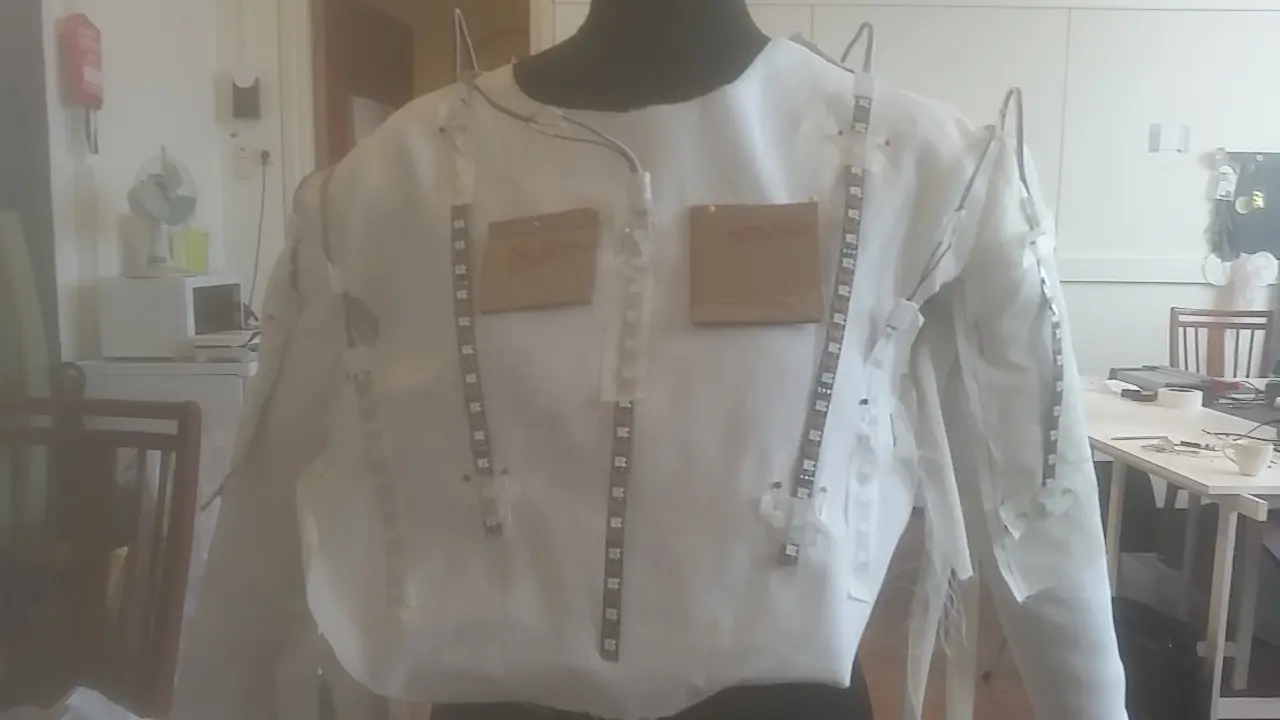
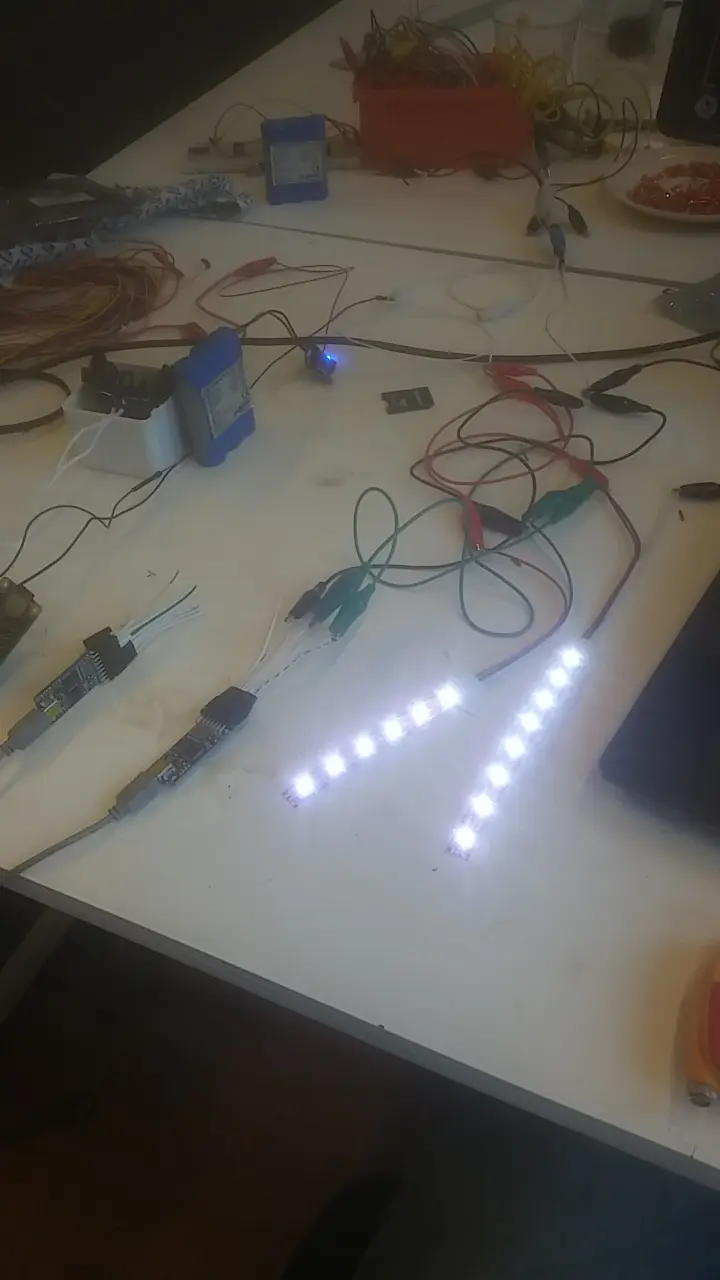
The 2016 system combined a pocket-sized aerosol monitor, a GPS watch and a Raspberry Pi with LEDs embedded in the garments. Pollution readings—especially PM2.5 associated with diesel traffic—were translated into colour. For the original Manchester performance, recently collected readings rather than instantaneous sensor data drove the visualisation.
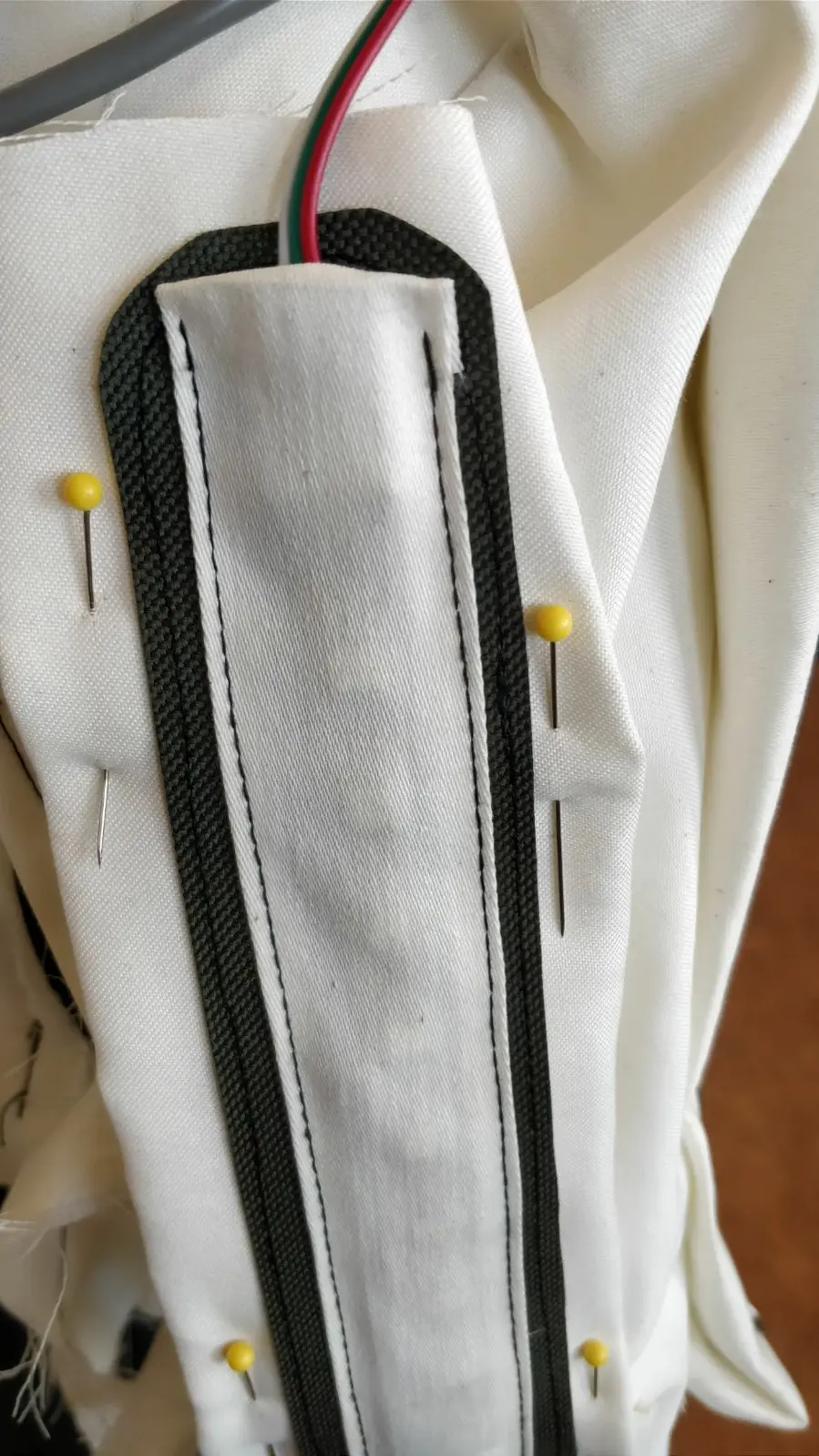
Ricardo O’Nascimento collaborated on the wearable system and later redesigned the inner cut of the Human Sensor LDN costumes so they could support dance, repeated use and more robust performance. Erik Overmeire redeveloped the electronics, while Molga directed the project’s exterior language and data visualisation.
Video documentation
See air pollution move through colour
02 · Experience
Sense, translate, perform
- 01
Sense
A portable aerosol monitor and GPS unit capture particulate-pollution readings as performers move through the city.
- 02
Translate
A Raspberry Pi maps the recorded PM2.5 levels to a colour sequence controlling LEDs inside the wearables.
- 03
Perform
Illuminated bodies carry the data into streets and venues, inviting public interpretation and conversation.
03 · Reflection
The body becomes a public display
Human Sensor shifts air-quality data from the graph to a shared, situated encounter.
The work makes an environmental condition intimate without reducing it to a number. Light spreads across a moving body, links an individual performer to the atmosphere around them and gives observers a changing signal they can read together. The 2018 London redesign also shows that a data wearable is an embodied design problem: its cut, weight, internal routing and durability determine whether information can move convincingly through performance.
Mobile performances bring environmental data into everyday public space and open conversation around air quality.
Human Sensor received the 2016 Les Respirations Special Prize and was later presented internationally.
Exhibition history
Selected presentations
Human Sensor · European City of Science
ESOF 2016
Manchester, UK
Human Sensor
Retune Festival
Berlin, Germany
Look Forward
La Gaîté Lyrique
Paris, France
Tech Fashion Show
Tech Fashion Show
Shanghai, China
Human Sensor
Victoria and Albert Museum
London, UK
Human Sensor
Transnatural
Amsterdam, Netherlands
Human Sensor
Dutch Design Week
Eindhoven, Netherlands
Human Sensor LDN · Under Her Eye
British Library
London, UK
Re____Use
Science Gallery Kuwait
Kuwait City, Kuwait
Human Sensor
Tate Modern
London, UK
Human Sensor
Da Vinci Creative Festival
Seoul, South Korea
Human Sensor
Festival of Thrift
Redcar, UK
International Air Quality Conference
City Hall
London, UK
Credits & archive
Project record
- Concept and artistic direction
- Kasia Molga
- Wearable design and costume development
- Ricardo O’Nascimento / POPKALAB
- Electronics and creative technology
- Erik Overmeire
- Commission and production
- Invisible Dust
- Scientific collaboration
- Environmental Research Group, King’s College London
- Original performance photography
- Nick Harrison, courtesy of Kasia Molga and Invisible Dust